


Will using your smartphone make your plane crash?
Find out if using your smartphone while in flight will make your plane crash.
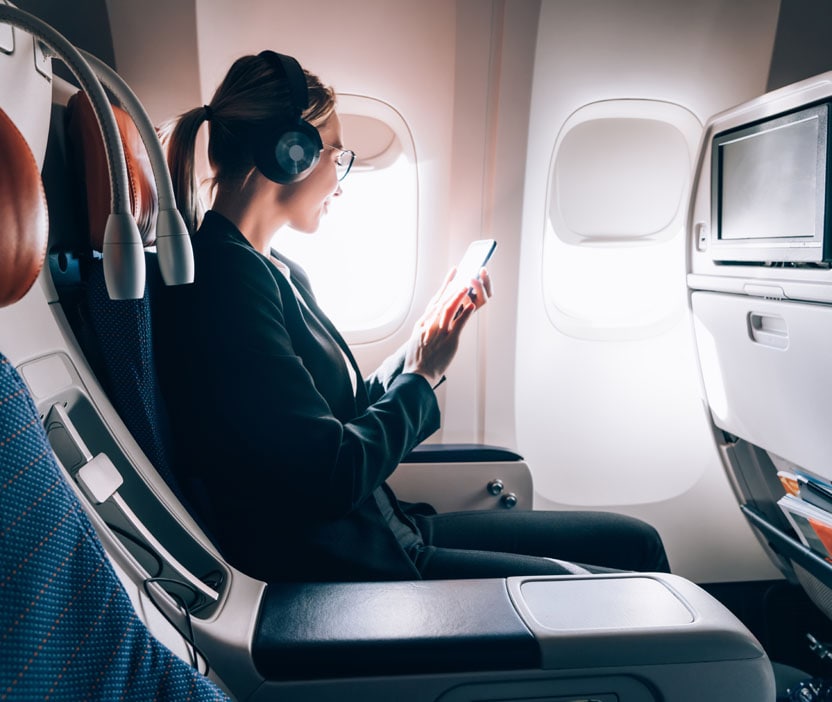

We’ve all heard the warnings: don’t use your smartphone when on a flight or bad things will happen. Nobody has ever explained the details but we know it’s something to avoid.
It sounds pretty extreme: how can one little signal coming from your phone affect a huge commercial airliner with top of the range technology? Are phones really that dangerous?
Let’s cut to the chase: using your smartphone probably won’t send the plane hurtling to the ground, though phone signals can mess with the plane’s systems, ranging from signal interference to navigational issues.
What happens when I use my phone inflight?
Let’s just clarify one thing first. It’s not just phones that have been restricted on board aircrafts, but Portable Electronic Devices (PED) of all sorts. PEDs include any kind of electronic device such as a tablet, a laptop, a smartphone, an e-reader (like a Kindle) or an MP3 player.
Phone communications work by bouncing the signal off cell towers on the ground to reach the person you’re calling. When a plane reaches up to 10,000ft, the signal from the phone bounces off multiple available cell towers, instead of one at a time. This frequent switching between towers clogs the network—a bit like how matted hair clogs the drain in the shower.
So, the reason you might not be allowed to call your mum from the plane is not because your phone will cause a crash or interfere with the pilot or the plane’s mechanics, but because you’ll cause issues with phone towers on the ground.
Now you know!
In 2013, the European Aviation Safety Agency (EASA) began to permit the use of PEDs for the majority of the flight duration. This was only so long as the devices were not transmitting, or as most of us know it, as long as they were set to ’airplane mode’.
Without our Kindles or phones, flight was boring and people complained so the EASA worked towards letting passengers use their PEDs on the plane.
Despite the time that’s passed, a lot of people don’t actually know that the EASA made it possible for airlines to allow passengers to use their PEDs throughout the flight. Now you can access your media on your flight, instead of hitting the snooze button and taking a nap.
With the EASA leading the way, the US followed suit and lifted the ban too.
But a word of caution
The EASA made it possible for the devices to be used on board, but it’s ultimately up to each airline to give it the go-ahead.
It’s not as simple as making the friendly decision of yes or no. The airlines must go through an assessment process, ensuring aircrafts are not affected in any way by the transmission of signals from the PEDs. If they fail the process you won’t be allowed to use your PED on board.
As this is an assessment process that each airline must take, it’s important that before your flight you check with your airline to see whether or not you’re allowed to use your PED on the plane. You also need to figure out how you can use it. The rules vary from airline to airline. Some airlines even have their own Wi-Fi system you can tap into, to make your frequent flyer miles pass by a bit faster.
For example, airline Aer Lingus has a Wi-Fi system in place; you can even text via their network ‘AeroMobile’. Give your airline a call before you hit the skies so you don’t get yourself in trouble if you’re online when you’re not supposed to be.
Moral of the story: do some research and see what is and isn’t allowed to avoid getting in any phone-related trouble.
While we can’t protect you in flight, we can keep your documents safe
Our security products will keep your documents and precious files safe from online threats. To keep up-to-speed with all things tech and online security, follow us on Facebook and Twitter.
Editorial note: Our articles provide educational information for you. Our offerings may not cover or protect against every type of crime, fraud, or threat we write about. Our goal is to increase awareness about Cyber Safety. Please review complete Terms during enrollment or setup. Remember that no one can prevent all identity theft or cybercrime, and that LifeLock does not monitor all transactions at all businesses. The Norton and LifeLock brands are part of Gen Digital Inc.




Want more?
Follow us for all the latest news, tips, and updates.